Single Wheel Racing Challenge
Review
Single Wheel Racing Challenge strips driving down to steering, braking, and hazard avoidance. The five-wheel selection adds a genuine strategic layer, since handling differences change how you approach each track. With 20 levels and simple desktop or mobile controls, it fits players who enjoy reflex-based challenges and repeated attempts. The main limitation is that the input does not describe multiplayer, story, or progression beyond level completion, so it is best suited to solo, short-session play.
About This Game
Precision Steering on Hazard-Filled Tracks
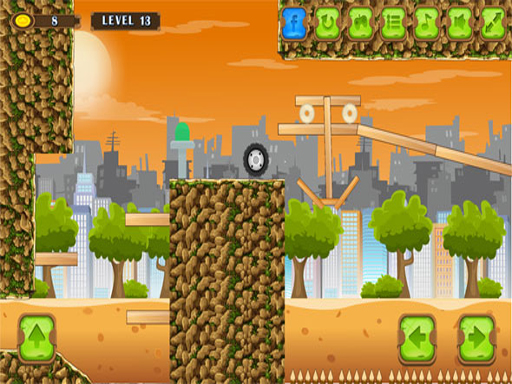
In Single Wheel Racing Challenge, you control a single wheel rolling along a track lined with spikes and barriers. The goal is simple: reach the end of the level without touching any hazard. There is no opponent to outrun and no lap time to beat. Every run is a test of how well you judge distance, speed, and the exact moment to steer or brake. The wheel moves continuously, so hesitation often costs more than a slightly early input.
Five Wheels, Five Handling Profiles
Before each attempt, you choose one of five available wheels. Each wheel changes how the vehicle responds to steering and braking. Some turn more sharply but may feel less stable at speed; others offer steadier control that suits tighter corridors. Because the tracks are fixed, the wheel you pick becomes a strategic decision rather than a cosmetic one. Experimenting with different wheels on the same level can reveal a handling style that makes a difficult section feel manageable.
Twenty Levels of Increasing Difficulty
The game includes 20 distinct levels. Early stages introduce spikes and barriers with generous spacing, giving you room to learn the controls. Later levels tighten the gaps and demand faster reactions, but the challenge comes from layout and timing rather than new mechanics. Each level is short enough to retry immediately after a mistake, which encourages learning through repetition instead of frustration.
Controls for Desktop and Mobile
On desktop, you steer with the arrow keys or WASD, accelerating and braking as needed. On mobile, touching the screen guides the wheel in the direction you want. Both control schemes are responsive and designed for short sessions, whether you have a few minutes or a longer stretch to play. The simple input keeps the focus on reading the track ahead and reacting cleanly.






💬 Comments
0 comments