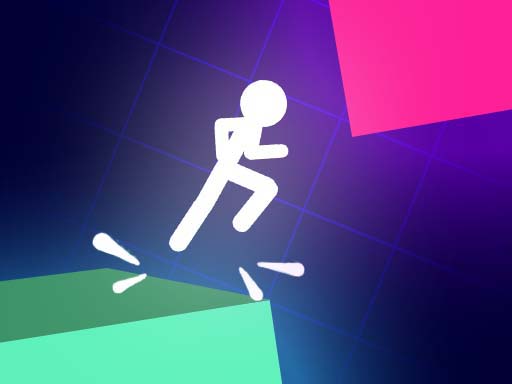
Neon Glow Arcade Runner
Review
Neon Glow Arcade Runner keeps its input simple and puts the pressure on timing. Landing on each glowing shape creates a satisfying chain of light, while stars unlock new areas and spikes or gaps end the run. The gradual difficulty curve suits short sessions and repeated attempts. The main limitation is that the input does not describe story, multiplayer, or deep customization, so players wanting those features should look elsewhere.
About This Game
Landing on Light
Every jump in Neon Glow Arcade Runner has a single purpose: land cleanly on the next glowing shape. A successful landing illuminates that shape, triggering a chain reaction of light across the path. Miss the timing, and the run ends. This makes the core loop less about speed and more about reading the rhythm of each shape before you tap.
Tap, Flip, and Time It
Controls are deliberately minimal. A tap or click makes the stickman jump, and you must flip the character at the right moment to land safely. There is no run button, no complex input, and no inventory to manage. The challenge comes entirely from when you act, not from how many buttons you press. That simplicity is what lets the difficulty scale without adding new mechanics.
Stars, Spikes, and Escalation
Stars collected along the way raise your level and unlock new stages. Those stages introduce more demanding arrangements of shapes, and obstacles such as spikes and gaps punish mistimed jumps. Because the game is an endless arcade loop, each attempt feeds directly into the next: you learn a pattern, fail, and try again with better timing. The difficulty curve is gradual enough that beginners can start immediately, but the later areas require quicker reflexes and more precise movement.
Visual Feedback and Stickman Style
The neon graphics are bright and easy on the eyes, and the stickman design keeps the character readable against the glowing shapes. Each successful landing produces a clear visual response, which matters in a timing game where you need to know instantly whether your input worked. Smooth animations support that feedback rather than distracting from it.




💬 Comments
0 comments