Fancade Circuit Control Racing
Review
Fancade Circuit Control Racing rewards patience over aggression. The handling model punishes jerky inputs, and weather shifts force constant adjustment. Vehicle variety encourages experimentation, though the short stages may leave some players wanting longer circuits. Best suited to drivers who enjoy mastering racing lines and adapting to changing conditions rather than those seeking high-speed arcade thrills.
About This Game
Track Design and Environmental Pressure
Each circuit in Fancade Circuit Control Racing is built around obstacles that punish careless speed. Tight curves, narrow tunnels, and sharp ninety-degree turns demand that players choose a careful path rather than simply accelerating. Some stages include elevation changes that shift the car's center of gravity, so drivers must modulate speed to avoid tipping. Road-surface visual cues help anticipate upcoming twists, but sudden weather shifts can reduce both visibility and grip, adding another layer of difficulty to every run.
Vehicle Handling and Input Feel
Before a race, players select from several vehicles, each with distinct handling characteristics. Some cars turn more tightly but have lower top speeds, while others favor straight-line velocity at the cost of stability. This variety encourages experimentation to find the best match for a given track. The handling model rewards smooth inputs; jerky steering or abrupt braking can upset the car's balance. Learning how each vehicle responds to different surfaces and weather conditions becomes key to improving lap times.
Session Structure and Accessibility
Stages are short enough to finish in a few minutes, making it easy to fit a race into a busy schedule, while the difficulty curve ramps up gradually for players who want extended practice. Controls are intuitive, with straightforward directional inputs that let new players start racing immediately. Responsive feedback from the car helps players quickly understand the consequences of their actions, creating a satisfying learning loop.
Balancing Speed and Stability
Success depends on finding the right balance between speed and control. Rushing into a corner often leads to a spinout or rollover. Instead, drivers should brake early and smoothly, then accelerate out of turns once the car is stable. Anticipating the track layout and adjusting speed before entering a curve is more effective than reacting mid-turn. Weather changes such as rain or fog demand further adjustments: reducing speed on wet surfaces helps maintain traction. Repeating challenging sections to memorize the ideal racing line can significantly improve overall performance.
Visual Style and Interface
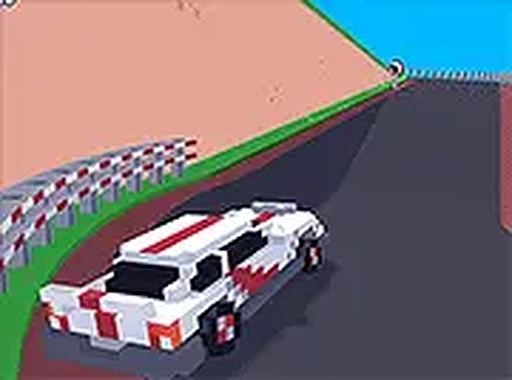
The game uses a clean, functional visual style that keeps attention on the road ahead. Track elements are clearly distinguishable, and the interface displays essential information like speed and stage progress without cluttering the screen. Full-screen mode enhances immersion, allowing players to concentrate on the driving experience. On mobile devices, touch controls are responsive and well-placed, while desktop users benefit from keyboard inputs that offer precise modulation. The minimalist design ensures that players can quickly understand their status and make split-second decisions.








💬 Comments
0 comments