Desert Leap: Stickman Puzzle
Review
Desert Leap: Stickman Puzzle keeps its scope tight: click cubes, time your jumps, and avoid falling. The desert visuals use warm colors and shifting light to create a calm backdrop, while the gradual introduction of wider gaps and new layouts provides a steady challenge. The absence of timers or scores makes it welcoming for casual players and younger audiences, though those seeking fast-paced action may find the pace too relaxed. It is a straightforward, family-friendly puzzle that rewards patience over reflexes.
About This Game
The Jumping Mechanic
Desert Leap: Stickman Puzzle is built around a single, precise action: clicking a cube to make the stickman leap from the current platform to the next. Every jump demands accurate timing and a quick read of the distance between cubes. A missed click means the character falls, so each decision carries immediate consequences. The game strips away timers, scores, and other pressure systems, leaving only the jump itself as the core challenge.
Desert Setting and Visuals
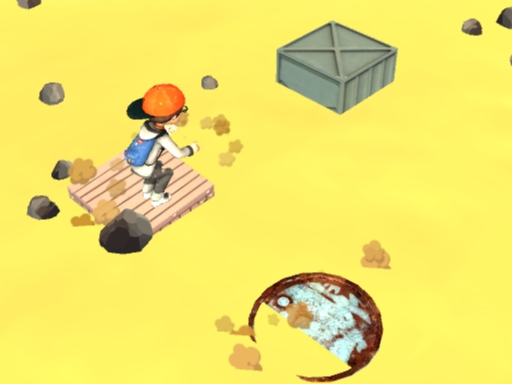
The game unfolds across a wide desert landscape rendered in warm colors. Changing light conditions shift the mood of the terrain as you progress, giving each stretch of cubes a distinct feel. The stickman character stands in simple contrast to the sandy backdrop, making it easy to track your position and judge the next leap. This visual clarity supports the gameplay, since misreading a gap often leads to a fall.
Progression and Layout Design
Early levels present cubes placed close together, allowing players to learn the jump rhythm without much risk. As you advance, gaps widen and patterns become more intricate, introducing new obstacles and arrangements that require faster thinking. The difficulty curve is gradual rather than sudden, so the challenge grows in step with your familiarity with the mechanic. There are no level timers, meaning you can pause and study a layout before committing to a jump.
Who This Game Suits
Because the controls are limited to clicking and the content contains no violence, Desert Leap is accessible to players of all ages. The absence of scores or countdowns makes it a low-stress option for short sessions. At the same time, the precision required at higher levels gives puzzle-focused players something to work toward. It rewards patience and observation more than reflexes, which sets it apart from faster arcade titles.








💬 Comments
0 comments