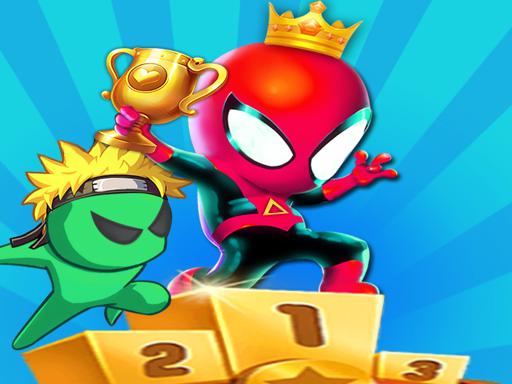
Stickman Obstacle Race
Review
Stickman Obstacle Race works best as a casual party racer. Its appeal comes from ragdoll physics, up to thirty-player lobbies, and elimination rules that reward hazard awareness over raw speed. The absence of gameplay-affecting purchases keeps matches even, and short rounds suit mobile play. The trade-off is that luck and crowd chaos can decide outcomes, so players seeking purely skill-based competition may find it inconsistent.
About This Game
Arena Survival, Not Sprinting
Stickman Obstacle Race is a multiplayer racing game where stickman characters compete in arenas packed with hazards. The objective is not to cross a finish line first but to stay alive while others are eliminated. Spinning bars, falling blocks, and tricky platforms fill each course, and any stickman who falls off or gets struck is out. The last player remaining wins the crown, which shifts the focus from pure speed to hazard awareness and positioning.
[IMG_1]Gesture Controls and Ragdoll Physics
Players move their stickman with simple swipe or tap gestures: left, right, jump, or duck. The controls are responsive and easy to learn, so new players can react quickly from the first match. A physics engine drives the humor, producing ragdoll effects whenever stickmen collide with obstacles or each other. Those collisions are not just cosmetic; they can shove a player off course, which makes crowded sections genuinely risky.
Match Structure and Replayability
Rounds are short and built for quick sessions. Because course layouts are dynamic and other players behave unpredictably, no two matches play out the same way. Real-time multiplayer supports up to thirty participants, and the chaos of that many stickmen on one course is a core part of the experience. Visual cues help players read incoming hazards, though luck still plays a role when the pack gets dense.
[IMG_2]Fair Competition and Performance
There are no in-app purchases that affect gameplay, so competition stays even regardless of spending. The colorful graphics and simple character designs keep the game easy on the eyes, and it runs smoothly on most devices without lag. That combination makes it accessible for short breaks and repeated sessions alike.
Improving Your Odds
Learning obstacle timing is the most reliable way to avoid falls. Staying aware of nearby players matters too, since a stray collision can end a run. Quick taps give more precise jumps and ducks than long swipes, and early eliminations are best treated as practice rather than failure. Planning a path toward the finish line while avoiding crowded areas reduces the chance of being pushed off.






💬 Comments
0 comments