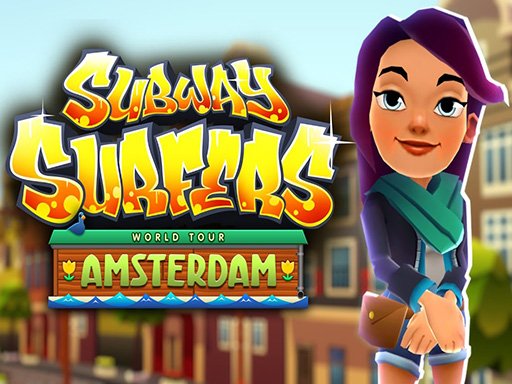
Amsterdam Dash Endless Runner
Review
Amsterdam Dash Endless Runner sticks closely to the endless runner formula: swipe to dodge, collect coins, and survive as the speed climbs. Its distinguishing feature is the Amsterdam setting, with canals, bridges, and historic buildings replacing a generic city. The coin economy gives runs a second purpose beyond distance, unlocking characters and hoverboards over time. The jetpack and coin magnet add short-term decisions. It suits players who want short, free browser sessions rather than deep progression, and the family-friendly tag makes it broadly accessible.
About This Game
Core Running Mechanics
Amsterdam Dash Endless Runner uses a lane-based control scheme: swipe left or right to change lanes, swipe up to jump over low obstacles, and swipe down to slide under barriers. The character moves forward automatically, so your only job is to read the road ahead and react before a collision ends the run. A short tutorial introduces these gestures before your first attempt. Coins sit along the route and are collected by running through them. As a run continues, the game speed gradually rises, tightening the window for each jump, slide, and lane change.
Amsterdam as a Setting
The environment draws on the Dutch capital's canals, bridges, and historic buildings, giving the route a recognizable skyline rather than a generic city backdrop. This visual identity is the main difference between the Amsterdam edition and other entries in the same city-hopping series. The upbeat soundtrack and bright graphics are built to match the pace of the run, and the whole package is designed to be family-friendly.
Coins, Characters, and Power-Ups
Coins serve two purposes: they are the score-adjacent collectible during a run and the currency used afterward to unlock additional characters and hoverboards. Power-ups appear periodically along the route. The jetpack extends how far you travel without touching the ground, while the coin magnet pulls nearby coins toward you. Both are temporary, so deciding when to rely on them matters as much as grabbing them.
Access and Session Length
The game runs in a browser with no download or installation, and it is free to play. Runs are short by design, which suits quick sessions between other tasks. The trade-off is that endless runners reward repetition: learning obstacle patterns and improving reaction time takes multiple attempts rather than a single long session.



💬 Comments
0 comments