Animal Pairs Memory Challenge
Review
Animal Pairs Memory Challenge keeps its scope tight: flip cards, find pairs, clear ten progressively larger boards. The absence of timers and penalties makes it genuinely relaxed, and the changing animal sets prevent visual fatigue. It suits children and adults who want brief cognitive practice rather than competitive pressure. The main limitation is that difficulty rises only through grid size, so players seeking varied mechanics may find the loop repetitive over long sessions.
About This Game
How the Matching Works
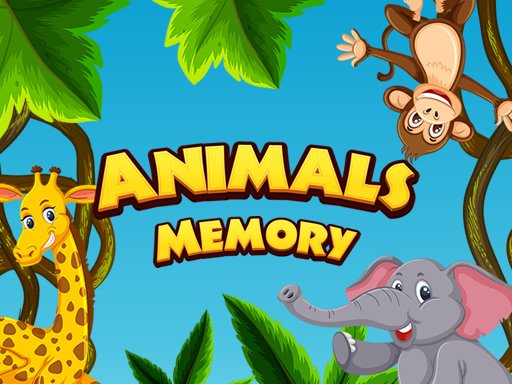
Every board starts face down. Tap or click a card to reveal the animal beneath, then choose a second card. A correct pair stays face up; a wrong pair flips back after a brief pause. The round ends when every pair on the board has been matched, and clearing the board unlocks the next stage. [IMG_1]
Ten Levels of Growing Grids
The game moves through 10 stages. Early boards use a small card count, and each subsequent level adds more cards, which lengthens the sequence a player must hold in memory. Because the difficulty scales with grid size rather than a countdown, the challenge comes from recall load instead of reflexes. Each stage also swaps in a different set of animal illustrations, so the visuals change as the boards grow. [IMG_2]
No Clock, No Penalties
There is no timer and no penalty for mismatches. That design choice shifts the game away from speed and toward deliberate scanning and recall. Players can pause on a card, name the animal silently, and plan the next flip without losing progress. The trade-off is that the game offers no external pressure to push faster, so motivation depends on wanting to clear the board or beat a previous attempt.
Who It Suits and Where It Runs
The calm format and friendly animal art make this approachable for children, while the later, larger grids still demand real concentration from adults. It runs in any modern web browser on desktop, tablet, or smartphone with no download or installation, which makes it easy to start in a spare moment or extend into a longer session.


💬 Comments
0 comments