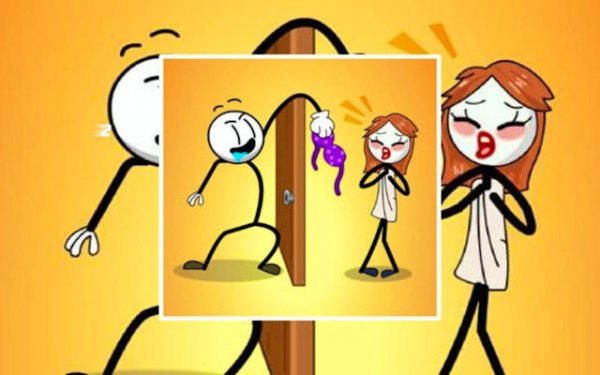
Stealthy Figure Logic Quest
Review
Stealthy Figure Logic Quest delivers a focused puzzle experience built on reading guard routes and platform cycles. The minimalist visuals keep distractions low, and the no-penalty retry system encourages experimentation. Difficulty rises gradually, combining earlier mechanics in new ways. It suits players who prefer thoughtful problem-solving over action, though those seeking fast-paced challenges may find the pace too slow.
About This Game
Reading the Room Before You Move
Every room in Stealthy Figure Logic Quest is a self-contained puzzle. Guards walk fixed routes, and moving platforms open and close narrow windows of opportunity. The figure you control is minimalist, and so is the information you get: what you see on screen is what you have to work with. Rushing almost always ends in detection, so the game nudges you toward a slower loop — watch, predict, then commit. That loop repeats across every stage, and it is the whole game in miniature.
How Levels Teach Without Tutorials
Early stages isolate one idea at a time. A single guard on a simple patrol, or one stationary hazard, gives you space to learn how timing works before anything else is added. Later areas combine those same elements in less obvious ways, so you are often tracking two or three moving pieces at once. The difficulty curve stays gradual because each new puzzle assumes you already understand the previous one. Environments change in theme and layout as you progress, which keeps the visual variety up without asking you to learn a new ruleset every few minutes.
Failure as Information, Not Punishment
There is no penalty for a failed attempt. When a plan falls apart, you keep whatever you learned about guard patterns and platform cycles, then adjust. That makes trial and error a legitimate way to solve puzzles rather than a sign you are playing wrong. The game rewards players who form a hypothesis, test it, and refine it — a loop of observation, action, and correction that stays consistent from the first room to the last.
Controls and Who It Suits
Controls are simple: tap or drag to guide the figure along a chosen path. No special dexterity is required, and nothing in the game depends on reaction speed. That makes it approachable for younger players while still offering enough layered logic to hold the attention of older ones. If you enjoy puzzles where the challenge lives in your head rather than in your hands, this is built for exactly that kind of player.




💬 Comments
0 comments