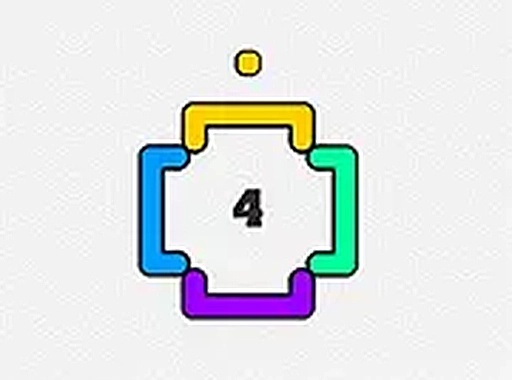
Hue Rotation Challenge
Review
Hue Rotation Challenge keeps its scope narrow: one block, four colors, falling tiles, and a single input. That restraint is the game's main strength, since there is nothing to distract from the color-matching decision. The difficulty ramp gives new players room to learn before tiles speed up, and the one-mistake rule makes anticipation more valuable than raw speed. It suits players who enjoy short, focused browser sessions rather than long progression systems.
About This Game
How a Run Works
Hue Rotation Challenge reduces its rules to a single square block split into four colored sections. Tiles fall from above, and each tile carries a color. The player rotates the block so the side facing the incoming tile matches that color. A correct catch keeps the run alive; a mismatch ends the attempt immediately. Because the block only has four faces, every rotation is a commitment. There is no health bar, no second chance, and no way to undo a turn.
Rising Pressure and Pacing
Early tiles fall slowly enough that new players can read the color, decide on a rotation, and act without rushing. As a run continues, tiles arrive faster and in less predictable sequences. The challenge shifts from pure reaction to anticipation: players who watch the upcoming tile can begin turning the block before the current one is caught. That overlap between one catch and the next is where runs are won or lost. The difficulty curve stays gradual, so failure usually traces back to a specific late decision rather than a sudden spike.
Controls and Visual Clarity
Every rotation is handled with a single tap or click, which keeps the game playable on both touchscreens and desktop browsers. The interface stays minimal so the colored block and the falling tiles remain the only things demanding attention. Each face of the block uses a distinct, easily recognized hue, reducing the chance that a loss comes from misreading a color. A full-screen option removes surrounding distractions for players who want to focus entirely on the sequence.
Where Strategy Enters
Reflex alone will not carry a long run. Skilled players track the next tile in the queue and pre-position the block so the correct face is already waiting. That habit converts a reaction test into a planning exercise, because a rotation made one tile early is worth more than a fast rotation made one tile late. The result is a game that rewards quick hands and clear thinking in roughly equal measure.


💬 Comments
0 comments