Memory Sketch Challenge
Review
Memory Sketch Challenge is a puzzle game built around a single loop: study an image, then draw it from memory. Its strength lies in that constraint—there are no distractions, just the gap between what you saw and what you can reproduce. The feedback system turns each attempt into a learning opportunity. It suits players who enjoy brain teasers or want to practice visual recall. The main limitation is that the input does not describe multiplayer or social features, so it appears to be a solo activity.
About This Game
How the Memory Loop Works
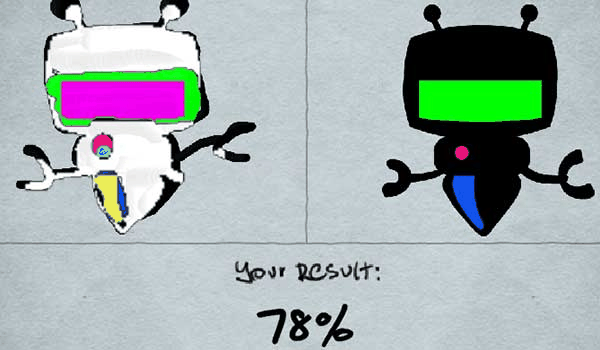
Each round in Memory Sketch Challenge follows a fixed sequence: an image appears on screen for a limited time, then disappears, leaving a blank canvas. You draw what you remember using a mouse or finger, and the game evaluates your drawing against the original. The closer the match, the higher your score. This observe-recall-draw cycle is the entire game, and it is what separates Memory Sketch Challenge from open-ended drawing apps that never ask you to remember anything.
What Makes Rounds Harder
Difficulty scales in two directions. Images become more detailed, and viewing times get shorter. Early rounds may show simple arrangements you can capture with a few shapes; later ones demand that you hold more information in your head before the canvas even appears. Because both variables change, you cannot rely on a single strategy. You have to decide what to prioritize—outlines, main colors, or the layout of objects—before the image vanishes.
Reading the Feedback
After each attempt, the game shows where your drawing matched the original and where it differed. That comparison is the main learning tool. If you consistently miss color placement but get shapes right, you know what to focus on next time. The feedback does not just score you; it tells you which part of your visual memory needs work.
Controls and Accessibility
Drawing uses a mouse on computers or a finger on tablets and smartphones. There are no complex inputs to learn. The game is designed to be picked up quickly by casual players, but the underlying task—holding an image in mind and reproducing it—is genuinely demanding. Sessions are short, which makes it easy to fit in a few rounds, and the mix of puzzle-solving and drawing keeps the activity from feeling like a pure test.



💬 Comments
0 comments